
Technology in Sports and AI-driven Careers in Australia
Think about it. Every single pass, every stride down the field, every cheer from the crowd – what if each one was a data point? A tiny piece of a puzzle just waiting to be put together. That's not a far-off future; it's the reality of sports today. Technology has well and truly moved from the sidelines to become the star player, changing the very fabric of how games are played, coached, and experienced.
The New Playing Field: Where Tech Meets Talent
This guide is your deep dive into how artificial intelligence and data science are fuelling this change, opening up a whole new world of opportunities for tech professionals right here in Australia. We'll look at how predictive analytics are being used to out-think opponents, how computer vision tracks player movements with a precision that's beyond human, and how data is forging stronger, more personal connections between teams and their fans.
For Australian data scientists and AI engineers, this is more than just a passing trend. It's a genuine career frontier where your skills can shape the future of sport. The old reliance on gut instinct is making way for data-driven strategy, creating a demand for a new kind of athlete off the field: the data professional.

From Instinct to Insight
For generations, coaching was an art form built on experience, observation, and intuition. Today, technology in sports translates every split-second movement on the field into solid, actionable intelligence.
Here’s a practical way to think about it: a coach can see a player looks tired. But wearable sensors can tell them that player's heart rate has been in the red zone for the last seven minutes, allowing them to predict a drop in performance before it actually happens.
This massive shift is built on a few key pillars:
Real-Time Data Capture: Tiny wearable sensors, GPS trackers, and high-speed cameras are constantly at work, collecting millions of data points in a single match.
Predictive Modelling: Machine learning algorithms sift through mountains of historical data to forecast player fatigue, anticipate an opponent's next move, and even flag potential injury risks.
Enhanced Fan Engagement: AI is now the engine behind personalised content, whether it's sending instant replays straight to your phone or overlaying augmented reality stats on a live broadcast.
The adoption of sports technology is transforming the way athletes train, compete, and engage with fans. A team or athlete that doesn’t rely on tech tools is now at a clear competitive disadvantage.
This guide is for any tech professional curious about breaking into this exciting space. We’ll unpack the core technologies, show you real-world examples from the AFL to the A-League, and give you a map of the Australian job market. Whether you're an AI engineer, a data scientist, or an ML specialist, your expertise has become a game-changing asset. Consider this your playbook for turning a passion for sport into a seriously rewarding career.
The Tech Behind the Trophies: What's Driving the Change in Sports?
To really get a grip on how much technology is shaking up the sports world, we need to pop the hood and look at the engines making it all happen. It’s not just one single invention; it’s a powerful mix of tools all working in concert. Together, they gather huge amounts of information, figure out what it all means, and help turn those insights into a winning game plan.
At the core of this shift are three key players: Artificial Intelligence and Machine Learning, the Internet of Things (IoT) with its army of wearable sensors, and sophisticated Data Analytics. Each has its own job to do, but they’re all connected, creating a constant feedback loop from the athlete on the field right back to the coaching staff.
Artificial Intelligence and Machine Learning
Think of AI and Machine Learning (ML) as the team’s secret weapon—the master strategist. These systems are brilliant at finding subtle patterns in massive datasets that no human analyst could ever hope to spot. Their main superpower? Predictive modelling.
This means they use historical data to make incredibly educated guesses about what’s going to happen next.
For instance, an ML model can chew through years of a player's performance stats, match it with their latest biometric readings from training, and flag a high risk of injury. This gives coaches the heads-up they need to manage that player's workload, maybe even benching them before they hit a physical breaking point.
This forecasting ability is a genuine game-changer, shifting coaching from reactive problem-solving to proactive, strategic planning.
IoT and Wearable Sensors
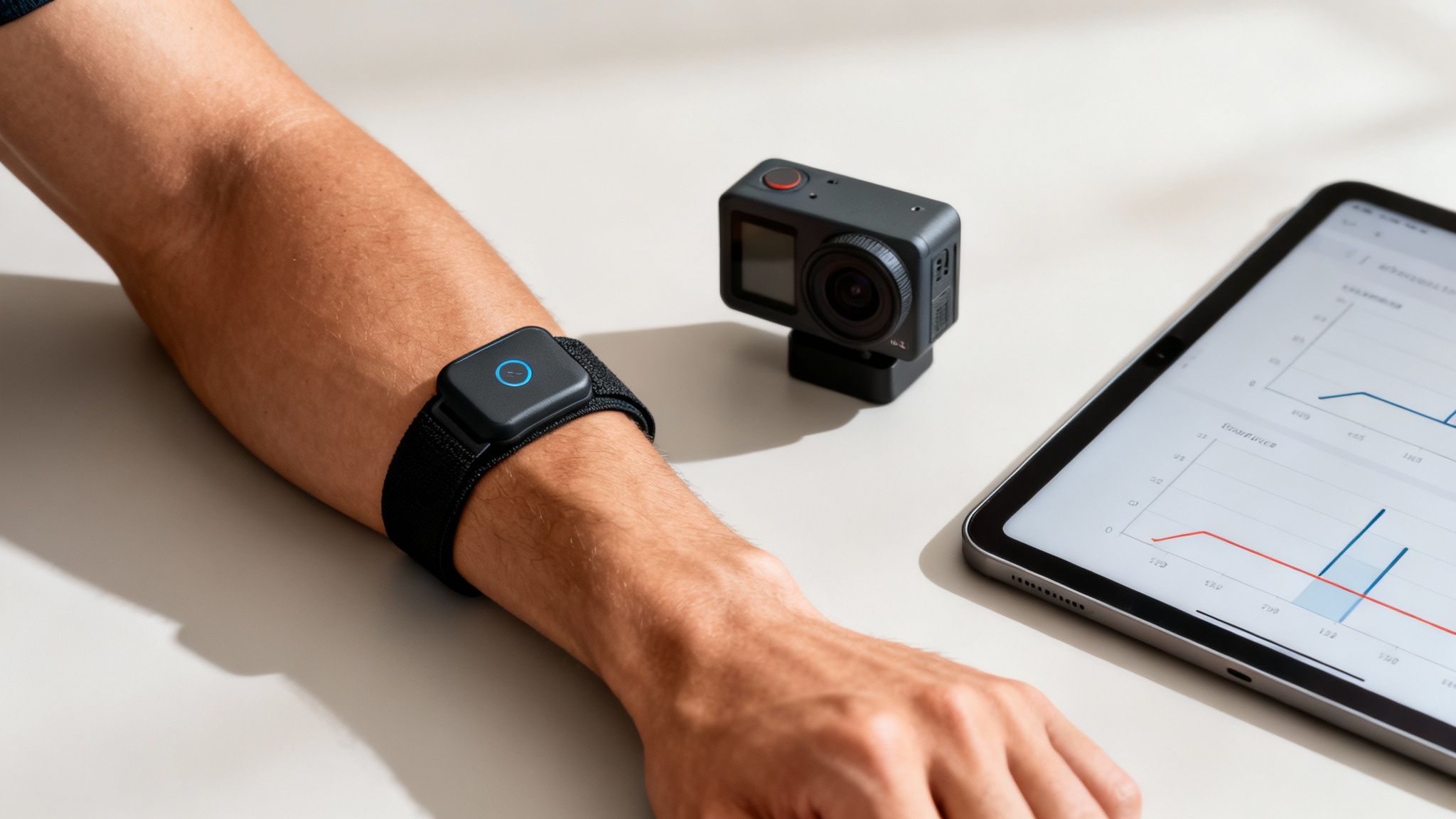
If AI is the brains of the operation, then the Internet of Things (IoT) and wearable sensors are the central nervous system. These are the actual bits of hardware that capture raw data straight from the source: the athlete.
GPS Vests: You'll see these on players in sports like AFL and rugby. They track every single move on the field, measuring total distance run, sprint speeds, and acceleration with pinpoint accuracy.
Smart Equipment: We're talking about everything from footballs with embedded chips to pressure-sensing insoles in a runner's shoe. This gear provides incredibly detailed data on technique and impact forces.
Biometric Monitors: These wearables keep an eye on vitals like heart rate, breathing patterns, and core body temperature, giving a live, inside look at an athlete’s physical state.
This firehose of real-time data is the fuel that powers the AI models, providing the ground truth they need to make accurate predictions.
The real magic happens when the data pouring in from wearables is fed directly into machine learning algorithms. This combination allows teams to stop just tracking what happened and start predicting what will happen, giving them a massive competitive advantage.
Data Analytics and Visualisation
Finally, all this information would be useless without a translator. That’s where data analytics and visualisation come in. This is the crucial step of turning complex model outputs and raw numbers into clear, simple insights that a coach can actually use.
Instead of being buried in spreadsheets, coaches get interactive dashboards that show tactical patterns, player fatigue levels, and even an opponent's weaknesses at a glance. It's about turning data into actionable intelligence, presented in a way that makes sense in the heat of the moment.
The following table breaks down how these technologies are making their mark on Australian sports.
Key Technologies and Their Impact in Sports
| Technology | Primary Function in Sports | Australian Example |
|---|---|---|
| Artificial Intelligence (AI) & Machine Learning (ML) | Analyses historical and real-time data to predict outcomes, such as player injury risk or opponent strategies. | Cricket Australia uses ML models to analyse bowling techniques and predict potential injuries, helping them manage bowler workloads. |
| IoT & Wearable Sensors | Captures granular physical data directly from athletes, including movement, speed, and physiological responses. | Elite AFL clubs use Catapult Sports GPS vests that provide 95% accurate movement data to optimise training loads and reduce soft-tissue injuries. |
| Computer Vision | Uses cameras and algorithms to automatically track player and ball movement, offering deep tactical insights. | The Hawk-Eye system, famous in tennis at the Australian Open, is also used in cricket for ball-tracking and decision reviews. |
| Data Analytics & Visualisation | Translates complex data into intuitive dashboards and reports, enabling coaches to make quick, informed decisions. | The Australian Institute of Sport (AIS) uses advanced analytics platforms to provide coaches with visual feedback on athlete performance across various disciplines. |
This whole ecosystem is booming right here in Australia. Valued at AUD 715.01 million in 2025, the local sports technology market is on a steep growth trajectory, fuelled by these very tools. For data and AI professionals, this is where you can build the systems that turn data points into championship points.
Putting Tech into Play: From the Pitch to the Stands
The real magic happens when all this abstract data translates into a genuine advantage on the field or a better experience for fans. This is where AI and data science stop being theoretical and start delivering tangible results, solving the everyday problems that clubs and organisations grapple with. It’s in these practical applications that data professionals are truly making their mark.

From fine-tuning an athlete’s health to completely rethinking how we watch a game, the applications are as varied as the sports themselves. Each use case is its own unique puzzle, demanding a mix of technical skill and a proper feel for the game.
On-Field Performance Optimisation
On the field, it’s all about finding that competitive edge. AI-powered analytics are no longer a novelty; they're essential tools for coaches and athletes, revealing insights that the human eye would simply miss. The mission is clear: boost performance and stop injuries before they even start.
Take professional cricket, for example. A computer vision system can break down a bowler's action frame by frame, measuring joint angles and stress loads with pinpoint accuracy. If the model spots a subtle change in technique—often a tell-tale sign of an impending injury—it flags it to the coaching staff. This early warning can be the difference that saves a player from a long and difficult setback.
It's a similar story in rugby, where machine learning algorithms chew through tactical footage. By analysing hours of past matches, an ML model might identify recurring patterns in an opponent's defence. It could reveal that a specific defensive setup is 15% more likely to crumble against a certain attacking play, giving the coaches a concrete, data-backed strategy for the weekend.
Automated officiating is another game-changer. Think of systems like Hawk-Eye in tennis and cricket. They use a network of high-speed cameras to track the ball's trajectory, making unbiased, split-second calls on the tightest of decisions. This tech doesn't just guarantee fairness; it removes a huge element of human error from those heart-in-mouth moments.
Off-Field Engagement and Operations
Technology's influence doesn't stop at the boundary line. For fans in the stands and at home, data science is crafting more personal and immersive experiences—which is absolutely vital for the commercial side of sport.
Smart stadiums are a perfect example. They use IoT sensors and data analytics to manage everything from crowd flow at the turnstiles to queue lengths at the pie stand. By predicting how crowds will move, operators can deploy staff more efficiently, making the whole match-day experience safer and more enjoyable.
This focus on data-driven innovation is fuelling some serious growth. The Australian sportstech sector recently hit an annual value of A$5.65 billion, climbing at a steady 10% year-on-year and cementing its spot in the world's top six clusters. For tech professionals, this boom means a surge in high-demand roles, with data scientists being brought in to build injury prevention models and engineers creating the next wave of sports tech. You can read more about Australia's thriving sportstech market and the opportunities it holds.
Personalised fan apps are the next frontier. These apps use machine learning to get a sense of what you like, then deliver custom highlight reels, real-time player stats, and exclusive content straight to your phone. It’s a tailored approach designed to build a much deeper connection with supporters.
And of course, there’s the world of fantasy sports, an entire industry built on a mountain of data. These platforms depend on complex algorithms to score player performances and manage leagues for millions of users, creating a massive ecosystem where data scientists and AI engineers are the MVPs.
Mapping Australia's Sportstech Job Market
If you're an AI professional with a passion for sport, you're in the right place at the right time. The Australian sports technology scene isn't just quietly growing; it's absolutely exploding. This isn't some niche, sideline part of the tech industry anymore. It's quickly becoming a major league player in its own right, creating a ton of opportunities for people who can blend sharp technical skills with a love of the game.
The numbers really tell the story. The Aussie sportstech market is on track to jump from USD 6.2 billion in 2025 to an incredible USD 16.7 billion by 2031. That's a compound annual growth rate (CAGR) of 17.6%.
This kind of growth is turning Australia into a global hub for sports innovation. As a result, the demand for data specialists who can work on everything from performance tracking to personalising the fan experience is through the roof. You can get a more detailed look at these numbers and learn more about the sportstech growth forecast.
This boom has sparked a vibrant ecosystem where startups, established tech companies, and sporting organisations are all hunting for the best AI talent.
Where the Opportunities Are
The action isn't spread evenly across the country. In fact, a massive 89% of the sportstech industry is packed onto the Eastern Seaboard, creating some clear hotspots for jobs.
Victoria (39%): No surprises here. Melbourne is the nation's sporting heartland, and it's the clear leader, home to major events, a huge number of sports organisations, and a buzzing startup scene.
New South Wales (28%): Sydney is a close second, with a big focus on professional leagues, broadcast tech, and the platforms that keep fans engaged.
Queensland (21%): Brisbane is the one to watch. It's a rising star, fuelled by big investments in performance science and the run-up to major international events.
This concentration means if you're an AI professional based in Melbourne or Sydney, you’re in a prime position to land a role where your skills can make a direct impact on the sports world.
The table below breaks down where the opportunities are and what kind of roles you can expect to find in Australia’s key sportstech hubs.
Australian Sportstech Hubs and Opportunities
| State | Industry Share | Key Focus Areas | Common Job Titles |
|---|---|---|---|
| Victoria | 39% | Elite sports performance, fan engagement, major events technology, wearable tech startups. | Machine Learning Engineer, Sports Data Scientist, Performance Analyst, Computer Vision Engineer. |
| New South Wales | 28% | Media & broadcast tech, professional league analytics, sports betting platforms, digital fan platforms. | Data Engineer, BI Analyst, AI Research Scientist, Product Manager (AI/ML). |
| Queensland | 21% | Athlete performance & monitoring, sports science research, event management systems, grassroots tech. | Data Analyst, Sports Scientist (with data skills), Software Developer (AI focus). |
As you can see, each state has its own flavour, but the underlying need for skilled data professionals is a constant theme across the board.
The Most In-Demand AI Roles
As clubs and sportstech companies pour more money into technology in sports, certain job titles keep popping up. These roles are the engine room of the industry, responsible for turning mountains of raw data into a genuine competitive advantage. If you've got skills in Python, TensorFlow, or cloud platforms, they are directly transferable to these high-value positions.
The modern sports organisation is now a technology company. They are hiring Machine Learning Engineers to build predictive models and Data Scientists to find the hidden patterns that lead to victory. Your technical skills are the new currency in this competitive arena.
Here's a look at some of the key roles shaping the industry today:
Sports Data Scientist: This is all about diving deep into huge datasets—everything from player GPS metrics to fan purchasing habits—to pull out insights that actually mean something. You could be building models to predict injury risks for a footy club or optimising ticket prices based on demand forecasts.
Machine Learning Engineer: These are the people building and deploying the algorithms that make modern sports tech tick. That might mean developing the computer vision system that tracks a player's every move on the field or creating the recommendation engine that powers a team's fan app.
Performance Analyst: This is a fantastic hybrid role that sits at the intersection of data science and sports science. Performance analysts work hand-in-glove with coaches and athletes, using data to shape training programs, inform game-day tactics, and fine-tune recovery protocols.
These jobs aren't just at the big professional teams, either. The ecosystem is broad, including broadcast companies, betting agencies, wearable tech startups, and ticketing platforms. If you're keen to break into this exciting sector, you can also check out our guide on AI startups in Australia, as many of them play in the sportstech space.
The message is loud and clear: the jobs are here, the industry is growing, and it's hungry for skilled AI professionals.
Navigating the Hurdles and Ethical Questions
For all the incredible advances technology brings to sport, its rapid rise has kicked up a cloud of complex challenges and serious ethical questions. Every new data point we collect adds to the weight of responsibility. It’s forcing teams, leagues, and the tech professionals behind the scenes to confront some genuinely thorny issues.
These aren’t just technical glitches we’re talking about. They cut right to the core of privacy, fairness, and the very spirit of the game. For the data scientists and engineers building these systems, navigating this ethical minefield is no longer a footnote—it's a central part of the job.
The Question of Data Privacy
Right at the top of the list is athlete data privacy. It’s one thing to track how fast someone runs, but today’s wearable sensors are capturing deeply personal biometric data: heart rates, sleep patterns, even stress levels.
This opens up a Pandora's box of questions:
Who actually owns this data? Is it the athlete? The club that pays their salary? The tech company that made the sensor? The lines are incredibly blurry.
How is it being used? Could a player’s sensitive health information be used as leverage against them in contract talks? Or worse, could it be part of a trade package?
How secure is it? Sports organisations are now major targets for cyberattacks. Protecting this treasure trove of personal information is a monumental task.
There are no easy answers here. It demands strong data governance and a new breed of ethically-minded professionals who know how to build privacy safeguards directly into the tech from day one.
Algorithmic Bias and Fairness
Then there’s the thorny issue of algorithmic bias. Machine learning models are often trained on historical data to help scout the next big star. The problem is, if that historical data is full of human biases, the algorithm will learn them—and then amplify them at scale.
Imagine a model trained on decades of old-school scouting reports. It might consistently undervalue players from certain demographics or those with an unorthodox style, simply because they don't match the "mould" of past successful athletes.
The promise of sports technology is to make things more objective and level the playing field. But if we aren't careful, the AI systems we build will just end up reinforcing the very same prejudices they were meant to overcome. It becomes a high-tech version of an old problem.
This also feeds into a growing financial and competitive gap. Elite clubs can pour millions into state-of-the-art analytics platforms, while grassroots and amateur sports get left in the dust. This imbalance threatens to create a permanent divide, making it even harder for raw talent to break through from lower levels.
The challenge for the entire industry is to figure out how to make these powerful tools more accessible, ensuring technology lifts the whole sporting ecosystem, not just the wealthy one percent. These are exactly the kinds of complex problems that demand skilled, thoughtful data experts to help build a fairer and more responsible future for sport.
How to Build Your Career in Australian Sports Technology
Getting your foot in the door of Australian sports technology isn't just about what you know; it's about blending sharp technical skills with a genuine love for the game. The real value you bring is your ability to take complex data and turn it into something a coach or athlete can actually use to win. It's a unique field, and building a career here means being strategic about the skills you develop and how you show them off.

It all starts with getting the technical fundamentals right. You absolutely have to be proficient in Python and its core data science libraries like Pandas and NumPy—that’s non-negotiable. Alongside that, you’ll need a solid grasp of SQL to pull data and some hands-on experience with machine learning frameworks like Scikit-learn or TensorFlow.
But here’s the thing: technical skills are only one piece of the puzzle. The people who really succeed are the ones who can act as a bridge between the numbers and on-field strategy.
Developing Your Game Plan
To really make an impression, you have to prove you can apply your skills within a sports context. The single best way to do this? Build a portfolio of projects that solve genuine sporting challenges. This is what makes a recruiter sit up and take notice.
Analyse Public Datasets: Get your hands on open-source data from leagues like the AFL or major cricket competitions. Use it to build predictive models or create visualisations that uncover interesting patterns.
Contribute to Open-Source Projects: Find online communities working on sports analytics projects and get involved. It's a brilliant way to show off your skills and your passion at the same time.
Network with Purpose: Go to industry events or connect with people on LinkedIn. Don't just add them—ask smart questions and try to understand the real-world problems that clubs and organisations are trying to solve.
The ability to explain complex findings to a non-technical audience is a critical skill. A coach doesn't need to know the intricacies of your model, but they do need to understand its output to make a winning decision.
Tailoring Your Resume and Portfolio
When you start applying for jobs, a generic resume just won’t cut it. You need to frame every bit of your experience through a sports lens. Instead of simply listing your technical skills, talk about how you used them to tackle a problem related to player performance, fan engagement, or tactical analysis. If you're looking for more tips on framing your skills for these kinds of jobs, our practical career guide on how to become an AI engineer has some great pointers.
Your portfolio should tell a story. Show how your projects uncovered tactical insights or helped predict player performance. It’s this proactive, problem-solving mindset that will set you apart and position you as a top contender in this exciting and fast-growing industry.
Got Questions About a Career in Sports Tech? We've Got Answers.
Stepping into a new industry always brings up a few questions, and the fast-moving world of Australian sports technology is no exception. If you're a data scientist or AI engineer thinking about making the jump, getting a feel for the landscape is the first step.
Let's break down some of the most common queries.
Do I Actually Need to Be a Sports Fanatic?
This is probably the biggest question on everyone's mind, and the answer is a resounding no. Sure, a passion for the game helps, but what clubs and organisations are really after is your technical firepower. They need people who can build solid machine learning models and wrangle complex data pipelines.
Think of it this way: the club is already packed with subject matter experts—the coaches, analysts, and sports scientists who live and breathe the sport. Your job is to be the data expert who can listen to their on-field problems and turn them into technical solutions. They bring the domain knowledge; you bring the data fluency.
What Are the Top-Paying AI Gigs in Sports?
It probably won't surprise you that the roles with the biggest paycheques are the ones needing highly specialised, high-impact skills. These are the positions at the heart of building a competitive edge, often leading big, complex projects.
Machine Learning Engineer: Anyone who can design, build, and deploy predictive models is gold. We're talking about everything from forecasting player injuries to understanding fan spending habits.
Computer Vision Engineer: This is a seriously sought-after skill, especially at the elite level. It involves analysing mountains of video footage to track player movement, identify tactical patterns, and automate analysis.
Lead Data Scientist: The big-picture thinkers. These are the experienced pros who can manage a team, set the data strategy for an entire organisation, and connect technical work directly to business goals.
At the end of the day, your value isn't just about knowing the tech. It's about showing how that tech leads to more wins on the field or more revenue off it. Proving that tangible impact is what really drives salaries in the hyper-competitive world of sport.
How Is All This Tech Affecting Grassroots Sports in Australia?
While the professional leagues get all the media attention, the cool thing is that technology in sports is slowly making its way down to the community level. It's no longer just for the pros.
Affordable sensors, user-friendly software, and cloud-based analytics platforms are giving smaller clubs access to tools that were once out of reach. This is helping with everything from making training more effective for young athletes to improving player safety. For tech professionals, this opens up a whole new area of opportunity—building scalable, budget-friendly solutions that can make a genuine difference where Australian sport truly begins.
Ready to find your place on the new playing field? At AI Jobs Australia, we connect top tech talent with the best sports technology roles across the country. Explore the latest AI and data science jobs in sports today!